


Machu Picchu Circuit 2 is the most comprehensive and sought-after route for exploring the Inca citadel of Machu Picchu. According to the current regulations of Peru's Ministry of Culture, this option combines a visit to the agricultural terraces in the middle section with the entire urban and religious area of the Inca citadel of Machu Picchu. It is an ideal option if you want to capture the most iconic panoramic photographs of the citadel and explore some of its most important structures.
What Is Machu Picchu Circuit 2?
Machu Picchu Circuit 2, known as the Classic Circuit, is one of the most comprehensive and popular routes for visiting the Inca citadel. This route allows visitors to discover some of the most important places in Machu Picchu, combining panoramic views of its agricultural terraces with visits to the main urban and religious sectors.
During the tour, you will be able to observe Inca architecture, walk among ancient temples and ceremonial structures, and enjoy some of the best spots to photograph Machu Picchu. That is why it is one of the most requested circuits by visitors who want to learn firsthand about the history and legacy of this ancient Inca city.
Circuit 2 requires a moderate level of physical fitness, as it includes stairways, uneven terrain, and walking sections. Before your visit, it is important to learn about its routes, schedules, and entry conditions to choose the option that best suits your trip.

Machu Picchu Circuit 2: Routes A and B
The Machu Picchu Circuit 2 routes are divided into two official options available year-round, according to the map published by the Peruvian authorities. Both offer a tour of the main sectors of the Inca citadel, including its agricultural terraces, urban spaces, and religious structures. Although they share several visiting points, each route follows a different path and allows visitors to appreciate Machu Picchu from different perspectives.
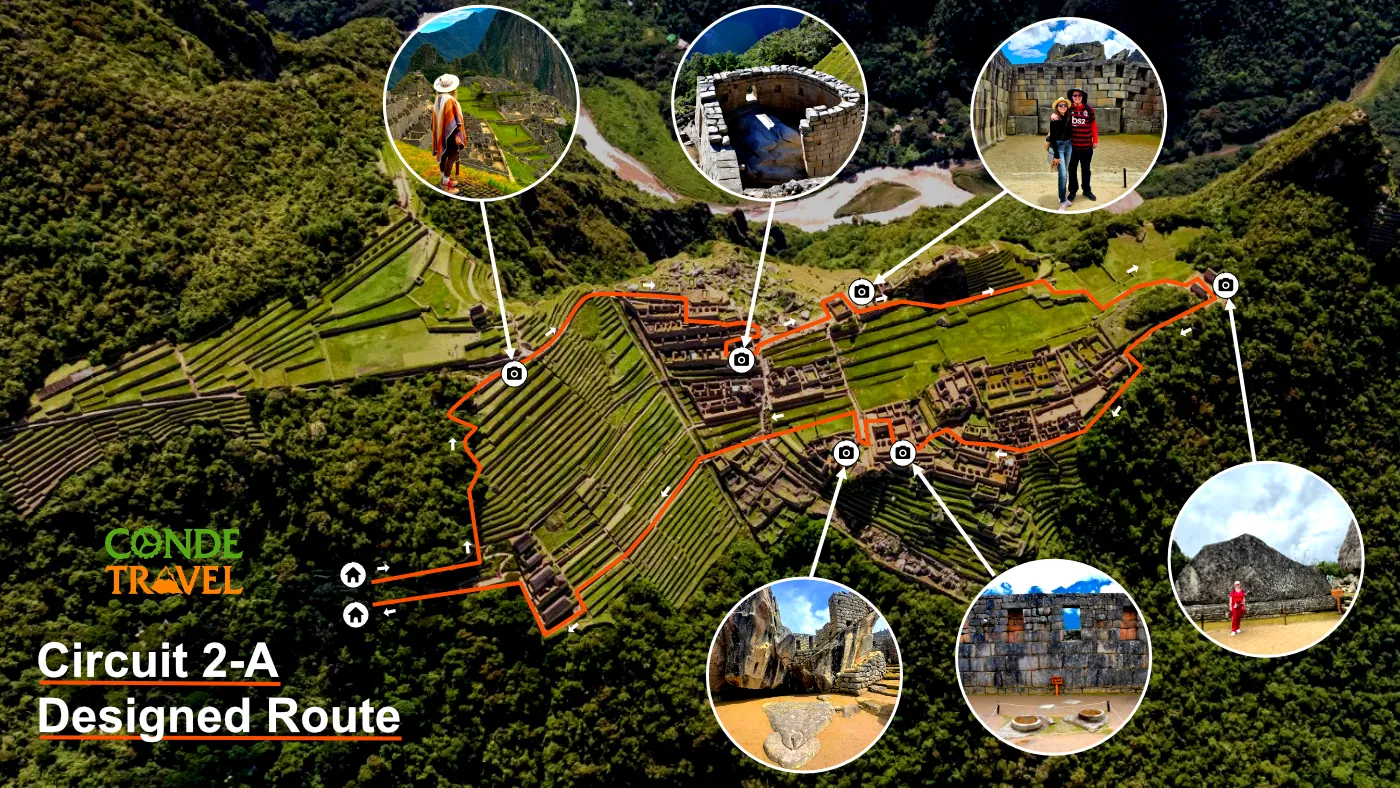
Route 2-A: Designed Classic Route
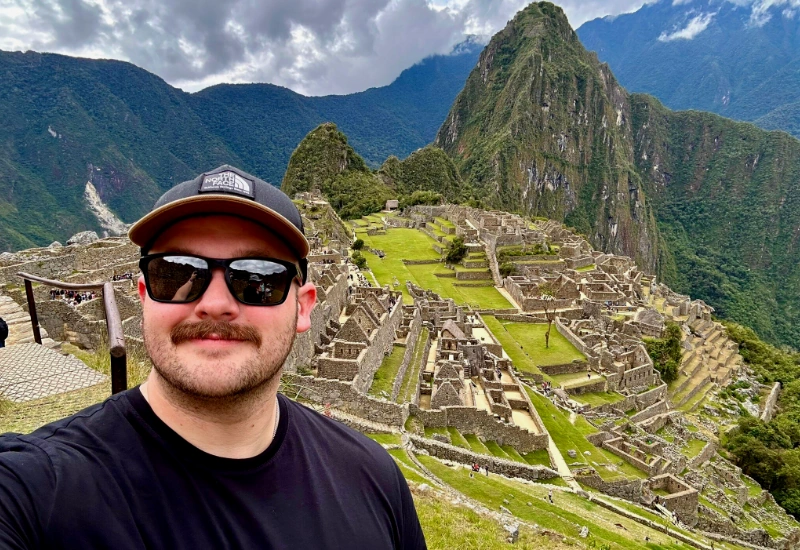
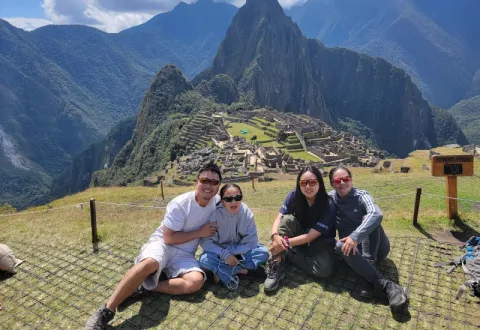
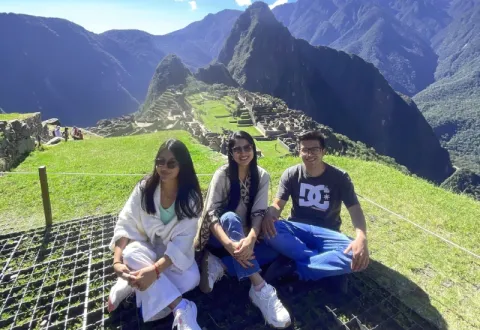
This classic Machu Picchu route is ideal for first-time visitors who want to combine panoramic photography from the highest point permitted on the circuit with a complete tour of the urban temples. The route ascends through the agricultural sector to the platform near the Guardhouse and enters through Llaqta Punku toward the religious area.
- Highlights: Classic viewpoint (platform near the Guardhouse), Llaqta Punku (main entrance), Temple of the Sun viewpoint, Sacred Plaza, Sacred Rock, and Water Mirrors.
- Duration and distance: 2.5 km round trip. Approximately 2 hours of walking time. Maximum stay: 2 hours and 30 minutes.
- Requirements and recommendations: Suitable for all ages (minors must be accompanied by an adult). This is the ticket that sells out first; book several months in advance and bring non-slip footwear, sunscreen, water, and a rain poncho.
Route 2-B: Lower Terrace Route
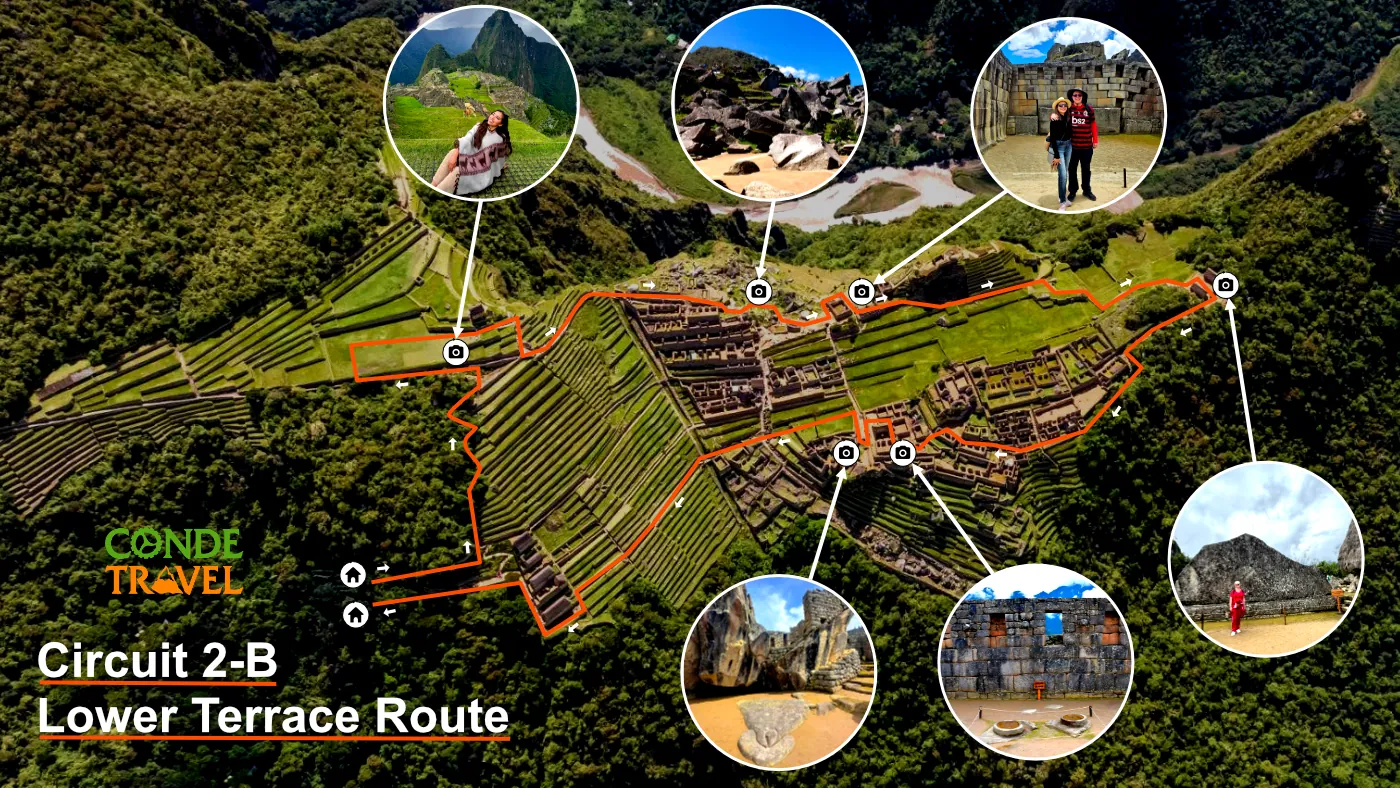
This variation of Machu Picchu Circuit 2 offers an experience almost identical to the previous one, but begins by ascending only as far as the lower terrace of the agricultural sector. From there, visitors can capture the postcard-style panoramic photograph before crossing the main entrance and exploring the stonework sector where Inca stones were carved.
- Highlights: Lower terrace (panoramic view), Llaqta Punku, Quarry Sector, Main Plaza, Sacred Rock, and the Water Mirrors complex.
- Duration and distance: 2.7 km round trip. Walking time between 2 hours and 2 hours and 30 minutes. Maximum stay: 2 hours and 30 minutes.
- Requirements and recommendations: Open to all ages. An excellent alternative if Route 2-A is unavailable. It is recommended to bring walking sticks with rubber tips (only for older adults or people with reduced mobility) and an original identification document.
Comparison Table of Machu Picchu Circuit 2 Routes
To easily identify the differences between Circuit 2A and 2B, review this comparison table based on official data from the Ministry of Culture:
| Feature | Route 2-A (Designed Classic) | Route 2-B (Lower Terrace) |
|---|---|---|
| Total distance | 2.5 km round trip | 2.7 km round trip |
| Maximum stay | 2 hours and 30 minutes | 2 hours and 30 minutes |
| Photography spot | Upper circuit platform | Lower terrace of the agricultural sector |
| Exclusive attraction | Temple of the Sun viewpoint | Stone Quarry Sector |
| Availability | Year-round | Year-round |
The Best Route of Machu Picchu Circuit 2
Choosing among the best routes of Machu Picchu Circuit 2 depends on how far in advance you purchase your ticket and your visual preferences, since both routes cover the urban core of the Inca citadel.
- Route 2-A: It is the best option if you book well in advance and want to take the classic photograph from a slightly higher angle, as well as see the Temple of the Sun.
- Route 2-B: It is the smartest choice when Route 2-A tickets have sold out, as it maintains the visit to the sacred plazas and adds the Quarry Sector.
Places Included in Machu Picchu Circuit 2
If you are looking for what Machu Picchu Circuit 2 includes and what to see on Machu Picchu Circuit 2, here are the main places visited on Circuit 2:
- Agricultural Terraces and Inca Terraces: stepped platforms that were used for agriculture.
- Guardhouse and Classic Machu Picchu Viewpoint: panoramic area from which visitors can enjoy the famous postcard view of the citadel.
- Dry Moat: structure that separates the agricultural sector from the urban sector of Machu Picchu.
- Temple of the Sun Viewpoint: place to see the semicircular architectural ceremonial structure.
- Granite Chaos and Quarry Sector: group of large rock formations that were used by the ancient Inca builders.
- Temple Plaza: ceremonial area where important religious buildings are located, such as the Main Temple and the Temple of the Three Windows.
- Botanical Garden: area associated with the urban sector, where visitors can appreciate the vegetation characteristic of the historic sanctuary.
- Intihuatana Pyramid: ceremonial stone structure located at the top of a pyramidal sector of Machu Picchu. Access may be restricted for conservation purposes.
- Sacred Rock: large carved monolith that symbolically represents the profile of the mountains surrounding the Inca citadel.
- Twelve Openings: architectural complex characterized by its openings and stone walls, representative of Inca architecture.
- Eastern Qolqas: ancient Inca storage buildings used to store agricultural products and other resources.
- Water Mirrors Complex: stone structures containing small cavities and surfaces intended for the storage or ceremonial handling of water.
- Temple of the Condor: architectural complex that stands out for its natural rock formations and stone elements that evoke the figure of a condor.
- Pisonay Plaza: open space where the presence of the pisonay tree stands out, characteristic of the Machu Picchu landscape.

Main Machu Picchu Sites Not Included in Circuit 2
The Machu Picchu Circuit 2 ticket does not allow visitors to explore all sectors of the Inca citadel or access the mountains surrounding the sanctuary. Some of the main places that are not included are:
- Temple of the Moon (Great Cavern): located on Huayna Picchu Mountain, this site is visited as part of Route 3-C of Circuit 3, available during the high season.
- Sun Gate (Intipunku): ancient entrance to the Inca city via the Inca Trail. Tourist visits to this site correspond to Route 1-C of Circuit 1.
- Huayna Picchu Mountain: famous mountain offering panoramic views of Machu Picchu. A Route 3-A ticket is required to climb it.
- Machu Picchu Mountain: mountain that allows visitors to hike to one of the sanctuary's summits. It is visited through Route 1-A.
- Huchuy Picchu Mountain: small mountain located next to Huayna Picchu. Access corresponds to Route 3-D, available during the high season.
- Inca Bridge: ancient structure built along a narrow path beside a cliff. Visits correspond to Route 1-D, available during the high season.
- Intihuatana Pyramid: important ceremonial stone structure. Although it appears within the Circuit 2 route, direct access to this area may be restricted for conservation reasons.
- Interior of the Temple of the Condor: the Circuit 2 route includes this archaeological complex, but it does not necessarily allow visitors to enter all of its interior spaces.
Frequently Asked Questions About Machu Picchu Circuit 2
Where Can You Buy Machu Picchu Circuit 2 Tickets?
You can purchase official tickets through the government platform Tu Boleto Cultura several months in advance, especially during the high season.
Is Hiring a Guide Mandatory for Circuit 2?
Although independent entry is permitted, taking a guided tour of Machu Picchu Circuit 2 greatly enhances your historical understanding. To travel without logistical worries, you can visit Machu Picchu with a guide and book a Machu Picchu Circuit 2 tour through authorized agencies that include trains, buses, and the complete classic Machu Picchu tour.
Machu Picchu Circuit 2 is the best option for discovering the main attractions of the Inca citadel, enjoying its panoramic views, and learning about its impressive archaeological legacy. Choose between Routes 2-A and 2-B and plan your visit in advance. Book your Machu Picchu Circuit 2 ticket with us.

Add new comment