


Planning a trip to the Inca citadel requires prior knowledge of the new Machu Picchu circuits, the available routes, and the entry regulations established by the Ministry of Culture of Peru. Since the implementation of the new official routes, visits to this wonder of the world have been organized into one-way circuits, each featuring different attractions, monuments, and archaeological areas.
Therefore, choosing the right Machu Picchu circuits and routes is essential to enjoying a worry-free experience, exploring the citadel's main attractions, and accessing its viewpoints to capture the perfect photograph of this wonderful tourist destination. In addition, planning your visit in advance will allow you to choose the circuit that best suits your preferences and secure your Machu Picchu tickets before they sell out.
What Are the Machu Picchu Circuits?
The Machu Picchu visitor circuits are currently organized into 3 major official circuits comprising 10 specific routes. Each ticket is linked to a single route, a date, and an exact entry time.
To understand the differences between the Machu Picchu circuits, consider this general breakdown:
| Circuit | Main Focus | Available Routes | Effort Level |
|---|---|---|---|
| Circuit 1: Panoramic | Aerial views from upper terraces and hikes to viewpoints. Does not enter the lower urban area. | Route 1-A, Route 1-B, Route 1-C (High Season Only), Route 1-D (High Season Only) | Moderate to High |
| Circuit 2: Classic Machu Picchu | A complete tour of the main archaeological sectors of Machu Picchu and the iconic postcard photo spot. | Route 2-A, Route 2-B | Moderate to High |
| Circuit 3: Machu Picchu Royalty | Access to the lower area (temples of the Inca elite) and mountains such as Huayna Picchu. | Route 3-A, Route 3-B, Route 3-C (High Season Only), Route 3-D (High Season Only) | Moderate to High |

Updated Machu Picchu Circuits and Routes
For the 2027 season, the Ministry of Culture of Peru establishes a maximum capacity of 4,500 visitors per day during the regular season and 5,600 visitors per day during the high season. In addition, for the high-difficulty mountain routes (1-A, 3-A, and 3-C), the latest permitted entry time in 2027 is 10:00 a.m.
Below, review the details of the types of Machu Picchu circuits and their 10 Machu Picchu routes:
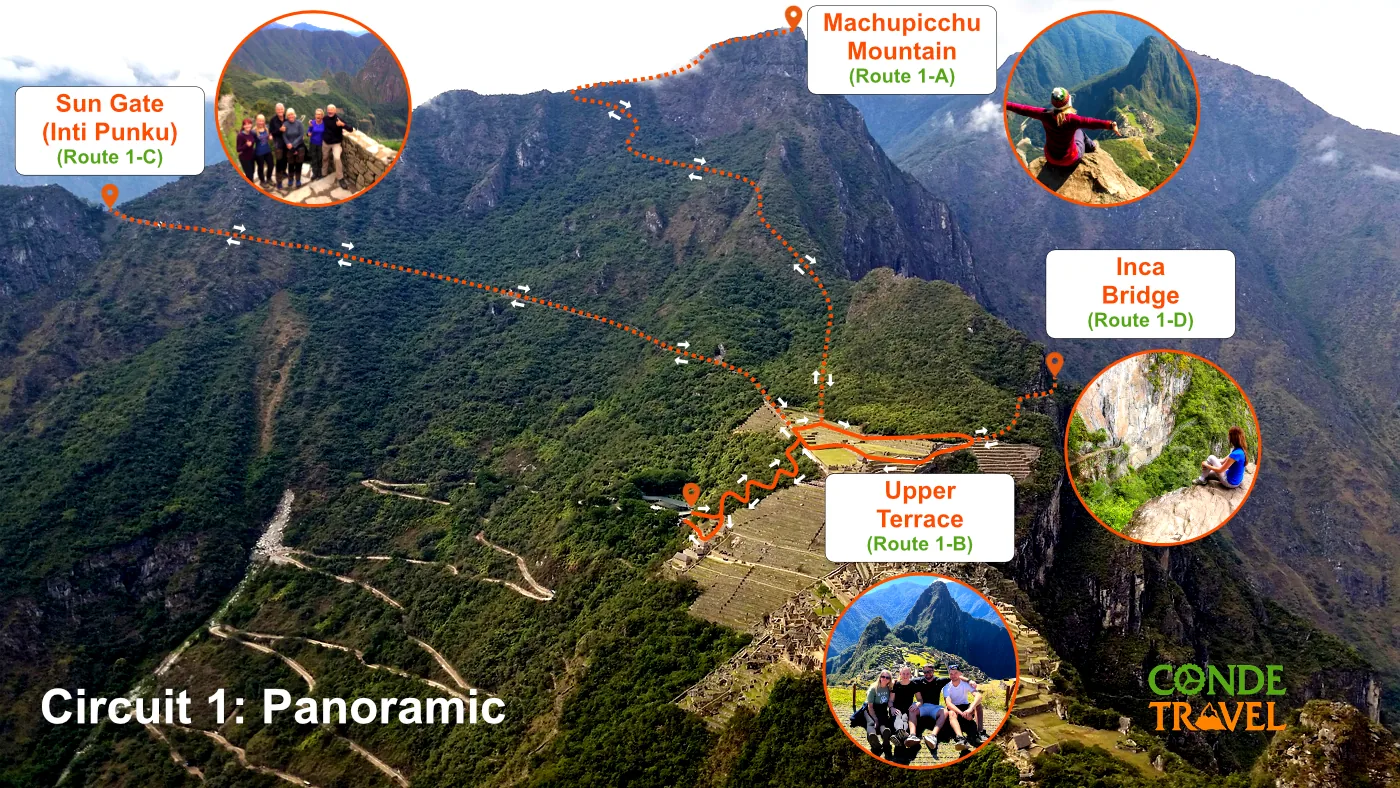
Circuit 1: Panoramic Machu Picchu
Circuit 1 is an excellent option for those who want to enjoy panoramic views of the Inca citadel and the mountains surrounding it. This Machu Picchu circuit has four routes that cover the highest areas of the archaeological site, from where you can appreciate Inca architecture and the beautiful natural landscapes of the surrounding area.
During the tour, you will walk along mountain trails and paths that offer different perspectives of Machu Picchu, ideal for admiring the citadel and taking photographs from various angles, including the famous classic Machu Picchu photo. Each route has a different difficulty level and allows you to discover impressive views of the stone structures, as well as the harmony between Inca architecture and nature.
Route 1-A: Machu Picchu Mountain Route.
This route allows you to climb Machu Picchu Mountain and enjoy breathtaking panoramic views from its summit. Along the way, you can admire the Salkantay and Pumasillo snow-capped mountains. It is an excellent alternative for those who want to appreciate Machu Picchu from above and capture photographs of its surroundings. The round-trip journey covers an approximate distance of 3.8 km and requires a high level of physical effort.
Route 1-B: Upper Terrace Route.
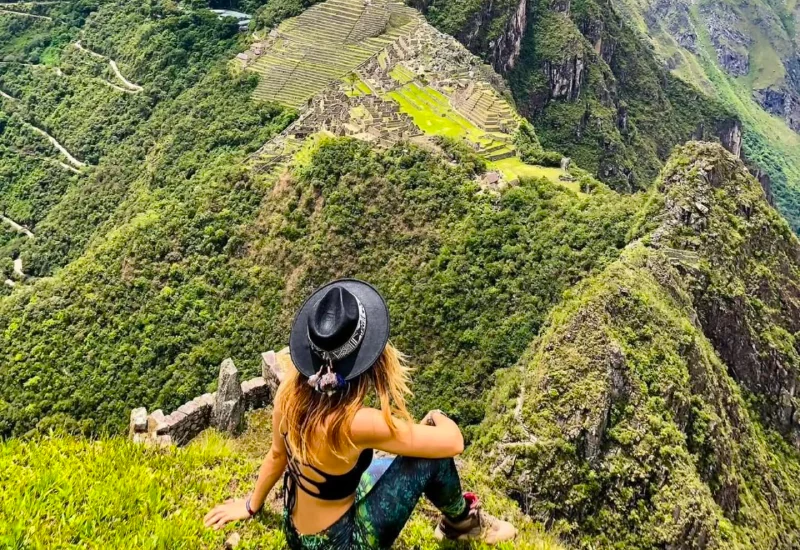
This Machu Picchu route is an excellent alternative for those who want to enjoy a panoramic view of Machu Picchu from the upper terrace viewpoint. From this location, you can see the Inca citadel, the geological formation known as the Vilcabamba Batholith, and the course of the Vilcanota River. In addition, it is one of the ideal places to capture the famous classic Machu Picchu photograph and take home an unforgettable memory of your visit. The round-trip journey covers an approximate distance of 1.6 km and requires a moderate level of physical effort.
Route 1-C: Intipunku Sun Gate Route (available only during High Season)
This Machu Picchu route takes you to the famous Intipunku Sun Gate, known as the ancient entrance to Machu Picchu via the Inca Trail. From this point, you can see part of this historic trail and enjoy a panoramic view of the citadel from a different perspective. It is an excellent option for those who want to explore this important archaeological sector and admire the landscape surrounding Machu Picchu. The round-trip journey covers an approximate distance of 3.4 km and requires a moderate level of physical effort. This route is available only during the high season.
Route 1-D: Inca Bridge Route (available only during High Season)
This route allows you to visit the Inca Bridge, an ancient structure made of stone and wood that stands out for its location and design. During the journey, you will observe this interesting feat of Inca engineering and enjoy views of the Vilcanota Valley. It is a good alternative for those who want to discover another attraction of Machu Picchu and enjoy its natural surroundings. The round-trip journey covers an approximate distance of 2.6 km and requires a moderate level of physical effort. This route is available only during the high season.
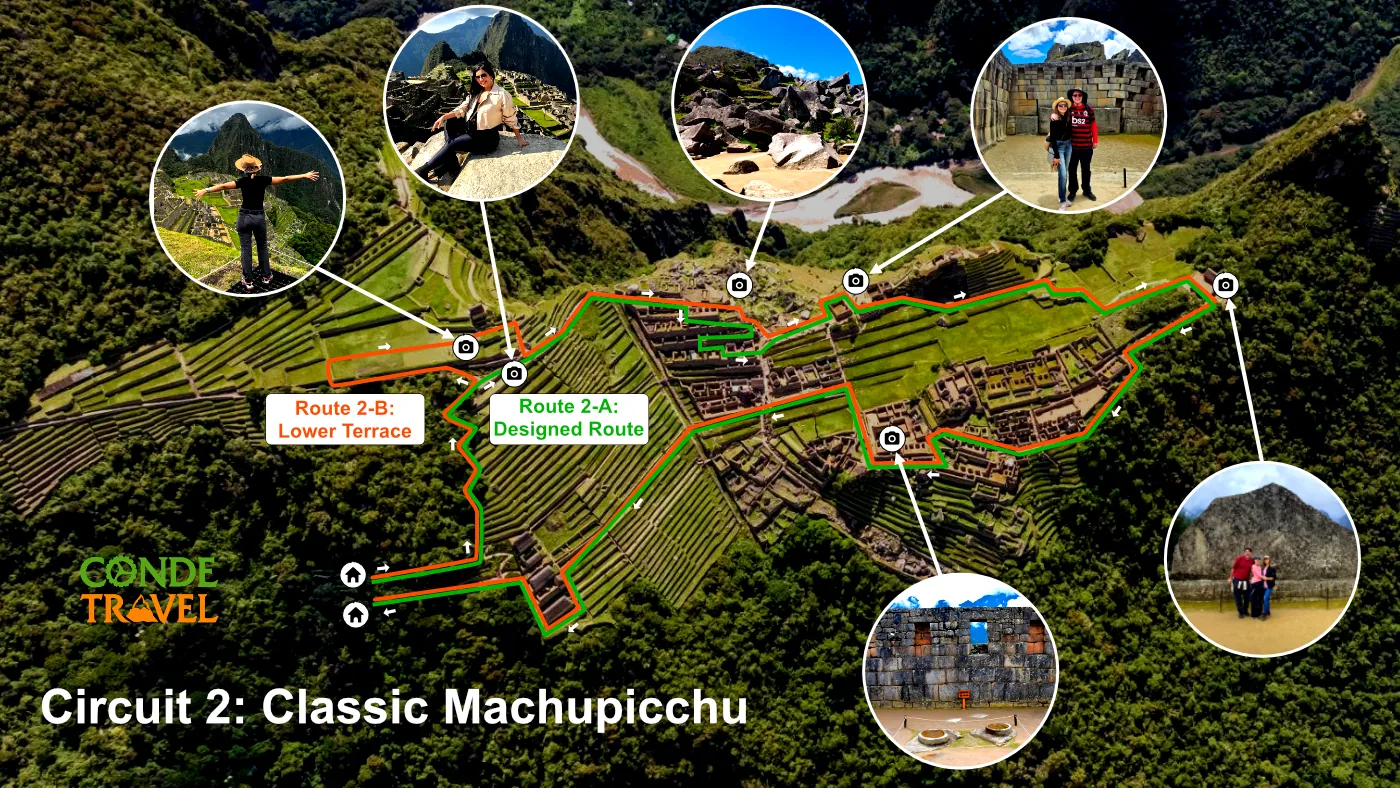
Circuit 2: Classic Machu Picchu
The Machu Picchu Circuit is one of the most comprehensive options for exploring the main sectors of the Inca citadel. Its route combines a visit to the agricultural terraces in the middle section with an exploration of the urban sector, where you will see ancient structures that served residential, ceremonial, and astronomical observation purposes.
This circuit has two routes that allow visitors to discover different archaeological areas and closely appreciate the architecture and layout of the ancient Inca city. Both routes require a moderate level of physical effort and are ideal for those who want to learn more about the history and legacy of Machu Picchu.
Route 2-A: Designed Route
The route begins in the agricultural sector, where you can enjoy a wide view of the Inca city. It then continues toward Llaqta Punku or the Main Entrance, the Temple of the Sun viewpoint, the Main Plaza, the Sacred Rock, and the water mirrors, allowing you to explore important archaeological areas and appreciate Inca architecture.
This route is also an excellent alternative for those who want to take the famous classic Machu Picchu photograph. The route covers an approximate distance of 2.5 km and requires a moderate to high level of physical effort.
Route 2-B: Lower Terrace Route
This route takes you from the agricultural sector to the lower terrace of Machu Picchu, along an uphill section that leads to one of the points offering panoramic views of the citadel. From here, you can admire the landscape and take the long-awaited Machu Picchu photograph. Afterward, the route continues through Llaqta Punku or the Main Entrance, the ancient quarries where stones were extracted for Inca construction, the Main Plaza, the Sacred Rock, and the Water Mirrors. The route covers approximately 2.7 km round trip and requires a moderate to high level of physical effort.
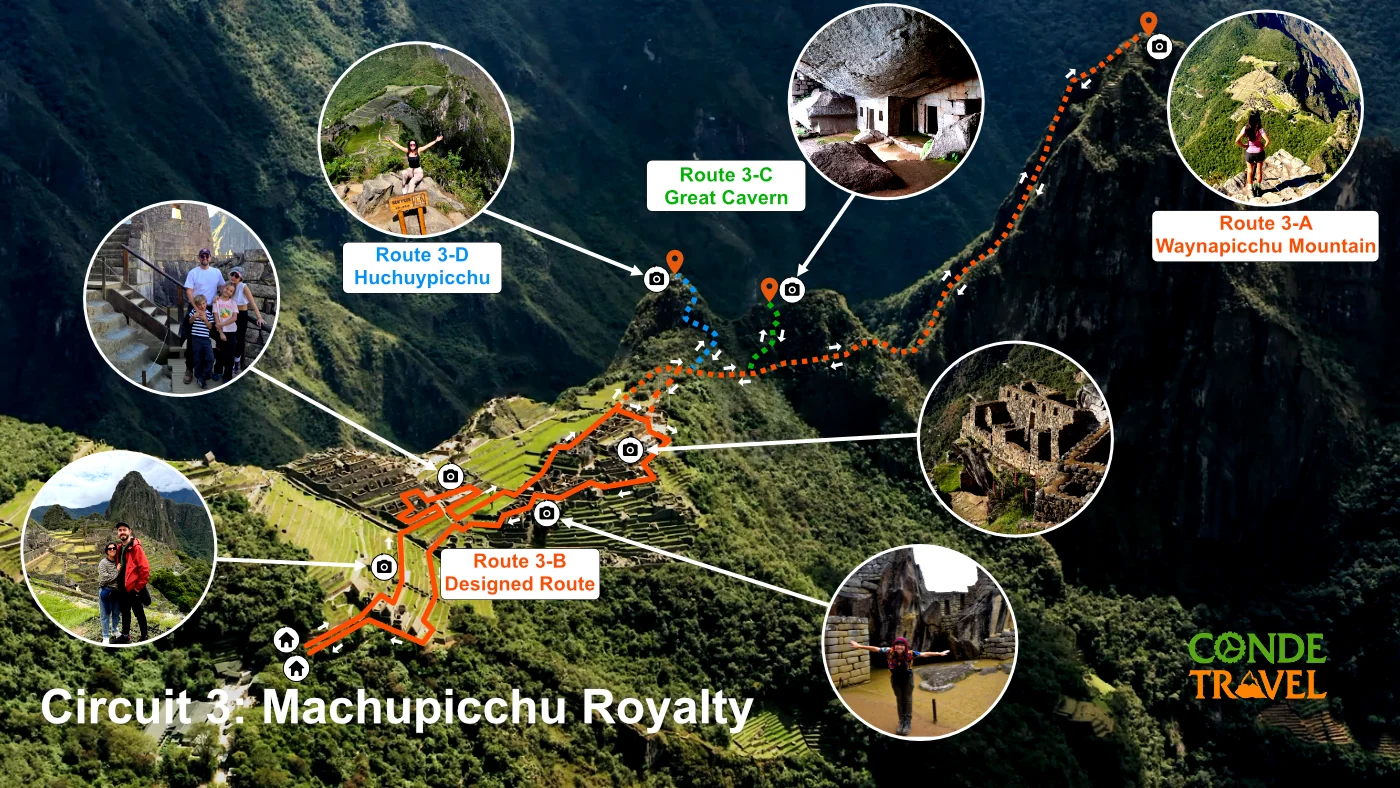
Circuit 3: Machu Picchu Royalty
This Machu Picchu circuit includes four routes that allow visitors to explore some of the most important areas associated with the Inca elite and royalty. During the tour, you can visit iconic structures such as the Temple of the Sun, the House of the Inca, and the Temple of the Condor, among other attractions that stand out for their historical and architectural value. This circuit requires a low level of physical effort, making it ideal for those who prefer a more leisurely visit to the citadel.
However, if you decide to complement your visit with a climb to Huayna Picchu or Huchuy Picchu mountains, or visit the Great Cavern, you should consider the need for greater physical effort and allow additional time to complete the experience.
Route 3-A: Waynapicchu Mountain Route
This Machu Picchu route begins in the agricultural sector of Machu Picchu, where you can capture the classic photograph of the Machu Picchu citadel, very close to the urban area. During the journey, you will discover important Inca structures, such as the Temple of the Sun, the House of the Inca, the Ceremonial Fountains, and the Three Doorways sector.
You will then continue climbing toward Waynapicchu Mountain, from whose summit you can enjoy breathtaking panoramic views of Machu Picchu. On your way back, you can visit the Temple of the Condor. The round-trip journey covers an approximate distance of 2.4 km and requires a high level of physical effort.
Route 3-B: Designed Route
The route begins in the agricultural sector, where you can admire the Inca terraces and take the classic Machu Picchu photograph from a point near the urban area. The route continues through important structures, such as the Temple of the Sun, the House of the Inca, the Ceremonial Fountains, the Three Doorways sector, and the Temple of the Condor. The round-trip journey covers an approximate distance of 1.3 km and requires a moderate level of physical effort. In addition, it includes an accessible section for wheelchair users or visitors who need assistance moving around the archaeological site.
Route 3-C: Great Cavern Route (available only during High Season)
This route begins in the agricultural sector, where you can observe the Inca terraces and capture the classic Machu Picchu photograph near the urban area. The route continues past the Temple of the Sun, the House of the Inca, the Ceremonial Fountains, and the Three Doorways sector, until you reach the Great Cavern. On the return journey, you will have the opportunity to visit the Temple of the Condor. The round-trip journey covers approximately 3 km and requires a high level of physical effort. This route is available only during the high season.
Route 3-D: Huchuypicchu Route (available only during High Season)
The route begins in the agricultural sector, where you can admire the Inca terraces and capture the classic photograph of the citadel near the urban area. The route continues past the Temple of the Sun, the House of the Inca, the Ceremonial Fountains, and the Three Doorways sector. From there, the trail leads to Huchuypicchu Mountain, whose summit offers panoramic views of the Inca citadel and its natural surroundings. On the return journey, you can visit the Temple of the Condor. The round-trip journey covers an approximate distance of 1.7 km and requires a moderate level of physical effort. This route is available only during the high season.
Panoramic Machu Picchu Photo: Machu Picchu Route
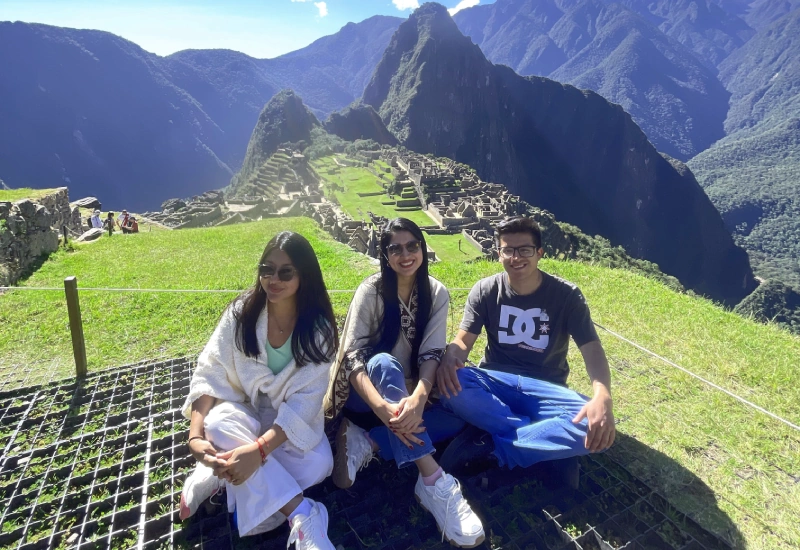
One of the biggest concerns when reviewing the Machu Picchu circuit map is purchasing a ticket that does not include the famous classic Machu Picchu photograph. You should know that the viewpoint changes depending on which ticket you purchase:
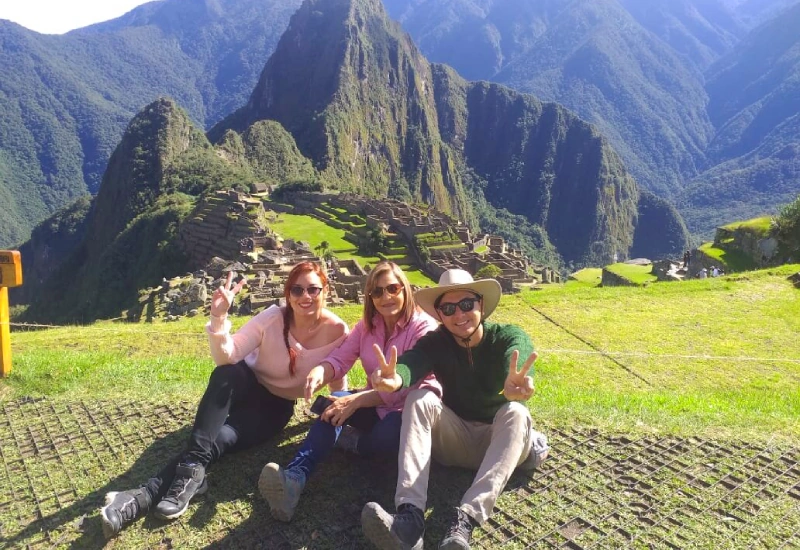
- The classic postcard photo from above: This can only be obtained on Circuit 1 (on all its routes, with Route 1-B Upper Terrace being the most direct and accessible) and on Circuit 2 (Routes 2-A and 2-B from the lower terrace).
- The panoramic photo from the lower area: On Circuit 3 (routes 3-A, 3-B, 3-C, and 3-D), you do not climb up to the Guardian's House. However, you can take a very clear, close-up photograph from the lower agricultural terraces, with the buildings of the urban area and Huayna Picchu directly behind them.
- Extreme aerial views: If you are looking for a perspective different from the traditional one, the routes to Machu Picchu Mountain (1-A), Intipunku (1-C), and Waynapicchu (3-A) offer spectacular elevated views of the entire sanctuary.
Best Circuit for Visiting Machu Picchu
There is no single answer to which circuit to choose in Machu Picchu, since the decision depends on your physical condition, interests, and how far in advance you purchase your ticket.
- First visit and looking for the complete experience: Circuit 2 (Route 2-A or Route 2-B) is the best circuit for visiting Machu Picchu. It combines the classic photograph from the middle-to-upper section with a complete tour of the main places to visit in Machu Picchu. Due to its high demand, it is the first to sell out.
- If you are looking for trekking and mountain-top adventures: Choose Route 3-A (Waynapicchu Mountain) if you want to climb steep trails with breathtaking views, or Route 1-A (Machu Picchu Mountain) if you prefer a longer, more expansive hike with 360-degree views.
- If you are traveling with older adults or children, or prefer a leisurely pace: Route 1-B (Upper Terrace) is perfect for getting the postcard photo without walking too much. On the other hand, Route 3-B (Designed Royalty Route) is the flattest, shortest, and most accessible option for exploring the fine architecture up close.
Frequently Asked Questions About Machu Picchu Circuits
How can I choose the Machu Picchu circuits and purchase Machu Picchu tickets officially?
Official online purchases are made exclusively through the Peruvian government's platform, Tu Boleto Cultura. To complete your purchase, you must register using a valid identification document (national ID or passport), select your date, route, and entry time, and make the payment within a maximum of 15 minutes. There is also a limited number of in-person tickets available at the Machupicchu Pueblo (Aguas Calientes) Cultural Center.
When is the Machu Picchu high season in 2027?
According to the Ministry of Culture's official regulations for 2027, the Machu Picchu high season covers 147 days distributed across four periods:
- From January 1 to 3.
- From March 25 to 28 (Holy Week).
- From June 19 to November 2.
- From December 29 to 31.
During these dates, the four additional routes (1-C, 1-D, 3-C, and 3-D) become available, and the daily visitor capacity increases to 5,600.
What happens to the Intihuatana in the new Machu Picchu circuits?
Direct access to the Intihuatana pyramid of Machu Picchu is temporarily restricted due to conservation measures to protect the stone heritage. However, when exploring Circuit 2 (Routes 2-A and 2-B), you can observe this sacred area from the authorized urban viewpoints along your route.
Can I change routes or turn back during my visit to Machu Picchu?
No. All Machu Picchu tourist circuits are strictly one-way and are supervised by SERNANP park rangers and Ministry of Culture staff. Once you move through an area, you are not allowed to turn back or switch to another circuit.
Is it mandatory to hire a tour guide to explore the Machu Picchu circuits?
Yes, the sanctuary regulations establish that entry and visits to Machu Picchu must be accompanied by an official tour guide. You can hire a private guide service in advance as part of your travel package or request an authorized guide at the citadel's entrance gate.
Plan Your Visit and Choose the Best Machu Picchu Circuit and Route
Knowing the Machu Picchu circuits will help you choose the route that best suits your interests and enjoy the main attractions of the Inca citadel.
Remember that tickets are subject to availability and that some routes have limited capacity throughout the year. Therefore, we recommend planning your visit in advance to secure your entry and enjoy an unforgettable experience. Contact us and check the availability of Machu Picchu routes and circuits.


Add new comment